Octa-core 64-bit
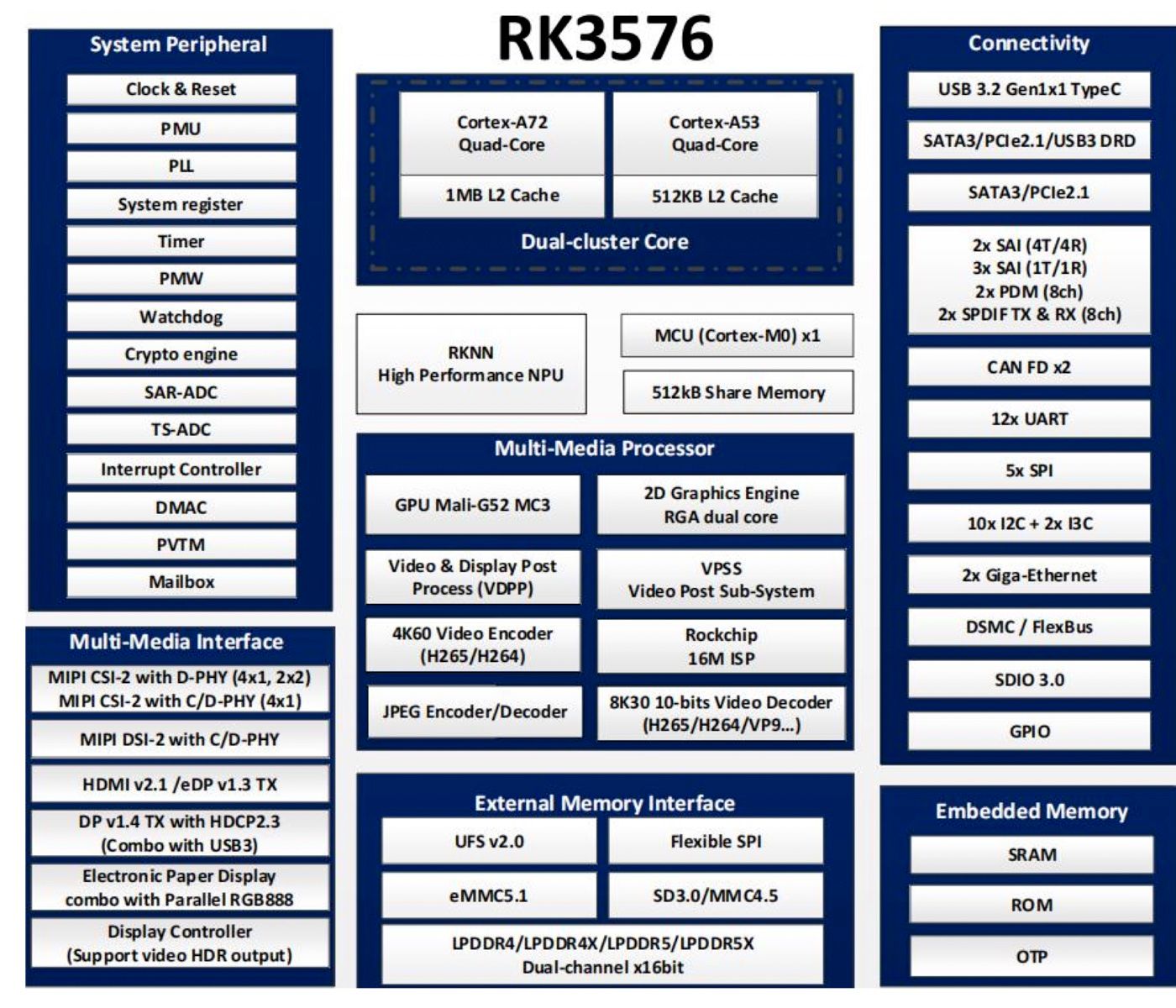
Quad Cortex-A72 up to 2.2 GHz plus quad Cortex-A53, with independent power and frequency scaling for each cluster.
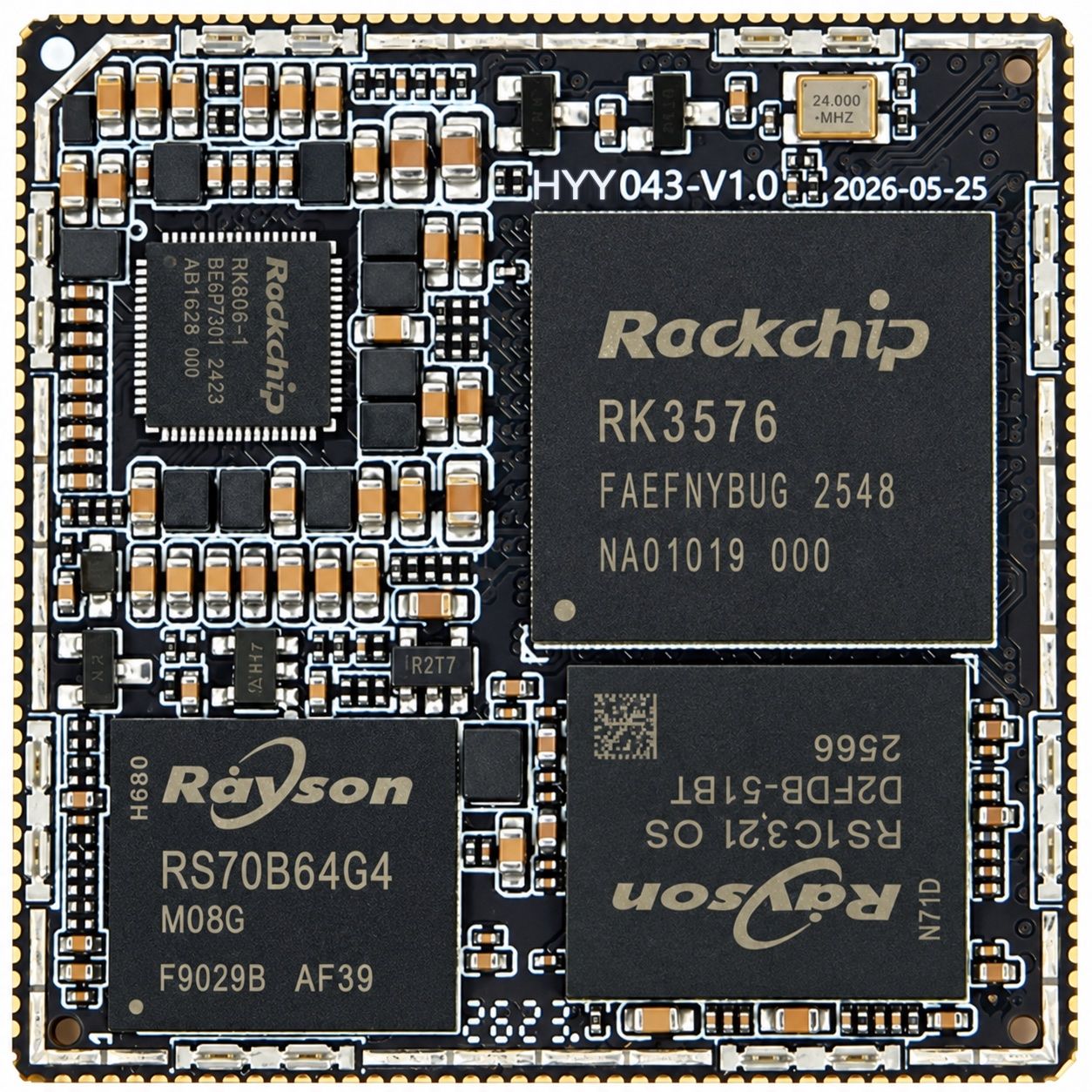
RK3576 SoM
Rockchip RK3576 octa-core SoM with a 6 TOPS NPU in 40 × 40 mm — 4K multi-display, 8K video decoding and rich industrial I/O.
Quad Cortex-A72 up to 2.2 GHz plus quad Cortex-A53, with independent power and frequency scaling for each cluster.
INT4/INT8/INT16/FP16/BF16/TF32 mixed precision; works with TensorFlow, PyTorch, ONNX, TFLite, Caffe and Android NN.
HDMI 2.1 / eDP 1.3, DP 1.4, MIPI DSI and parallel RGB over three independent display pipelines, up to 4K@120Hz.
H.265 decoding up to 8K@30fps and 4K@120fps, H.265 / H.264 encoding up to 4K@60fps, and a 16 MP ISP.
2× CAN FD, 12× UART with RS485, 2× Gigabit Ethernet, 2× PCIe 2.1 / SATA and 2× USB 3.2.
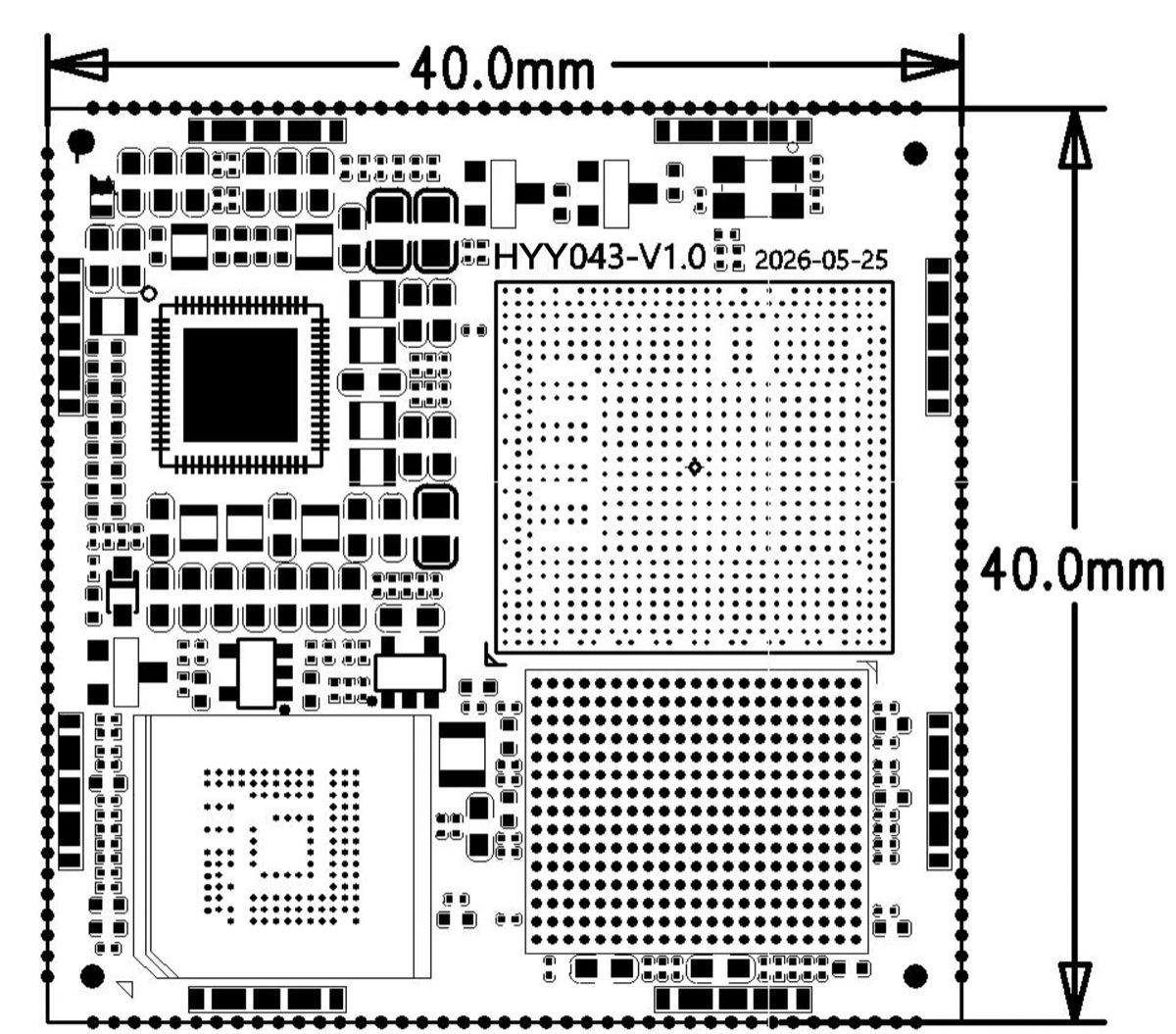
40 × 40 mm with LPDDR5, eMMC and the RK806S-5 PMU on board, plus a 2.7–5.5 V input for simpler carrier boards.
The RK3576 SoM is built on Rockchip’s RK3576 octa-core processor with a 6 TOPS NPU, LPDDR5 memory and eMMC storage. In just 40 × 40 mm it delivers 4K multi-display output, 8K video decoding and a full set of industrial interfaces for smart displays, medical devices, video intercoms and HMIs, running Android 14 or Debian 12 out of the box.
| Platform | |
|---|---|
| Processor | Rockchip RK3576, octa-core 64-bit: 4× Cortex-A72 (up to 2.2 GHz) + 4× Cortex-A53, with a Cortex-M0 coprocessor |
| GPU | Mali-G52 MC3, OpenGL ES 1.1 / 2.0 / 3.2, Vulkan 1.1, OpenCL 2.0; dual-core RGA 2D acceleration |
| NPU | 6 TOPS (INT8), INT4 / INT8 / INT16 / FP16 / BF16 / TF32; TensorFlow, PyTorch, ONNX, TFLite, Caffe, Android NN |
| Memory | LPDDR5, 32-bit, 4 GB by default, up to 8 GB |
| Storage | eMMC 5.1, 64 GB by default, 128 GB / 256 GB optional |
| OS | Android 14, Debian 12 (Linux kernel 6.1) |
| Multimedia | |
| Video decoding | H.265 up to 8K@30fps and 4K@120fps; H.264, VP9 and more |
| Video encoding | H.265 / H.264 up to 4K@60fps |
| ISP | 16 MP ISP with HDR, 3A (auto exposure / focus / white balance) and lens shading correction |
| Camera input | 3× MIPI CSI-2 (2× 4-lane D-PHY + 1× 4-lane C/D-PHY); DVP 8 / 10 / 12 / 16-bit |
| Display | |
| HDMI / eDP | HDMI 2.1 up to 4K@120Hz, or eDP 1.3 up to 4K@60Hz (one of the two) |
| DP | DP 1.4 up to 4K@120Hz, with MST and USB Type-C output |
| MIPI DSI | 1× MIPI DSI-2, 4-lane D-PHY (2.5 Gbps per lane) or 3-trio C-PHY |
| Parallel / E-paper | Parallel RGB up to 1080P@60Hz; EBC e-paper interface up to 2560 × 1920 |
| Multi-display | Three independent display pipelines for different content on each screen |
| Connectivity and Expansion | |
| USB | 2× USB 3.2 Gen1 / USB 2.0 OTG; USB0 supports Type-C (DP Alt Mode) |
| PCIe / SATA | 2× PCIe 2.1 (RC, 5 GT/s), shared with SATA 3.1 |
| Ethernet | 2× Gigabit Ethernet MAC (RGMII / RMII) |
| CAN | 2× CAN FD |
| UART | 12×; UART1–UART11 support hardware flow control and RS485, UART2 is the debug port |
| SPI / I2C | 5× SPI; 10× I2C + 2× I3C |
| SDIO | 2× SDIO 3.0 |
| Audio | 5× SAI (I2S / TDM / PCM), 2× PDM (up to 8 channels), SPDIF in / out |
| Others | 16× PWM, 8-channel 12-bit SARADC, temperature sensor, GPIOs |
| Security | Hardware crypto engine: AES, SM4, SHA, SM3, RSA, ECC, SM2; 16 kbit OTP |
| Power and Mechanical | |
| Power input | 2.7 V – 5.5 V |
| Power management | RK806S-5 PMU on board, with 3.3 V / 1.8 V outputs for the carrier board |
| Dimensions | 40 × 40 × 3.2 mm (3.7 mm with shielding) |